Prospect qualification should not feel like detective work every time an SDR opens a profile, company page, CRM record, spreadsheet row, or lead-list result.
Yet that is how many outbound teams still work. A rep opens a prospect, scans the title, checks the company, looks for signs of relevance, guesses whether the account fits, and then decides whether to write a message, add the person to a sequence, or move on. Multiply that by hundreds of prospects, and the problem becomes obvious: qualification becomes slow, inconsistent, and hard to explain.
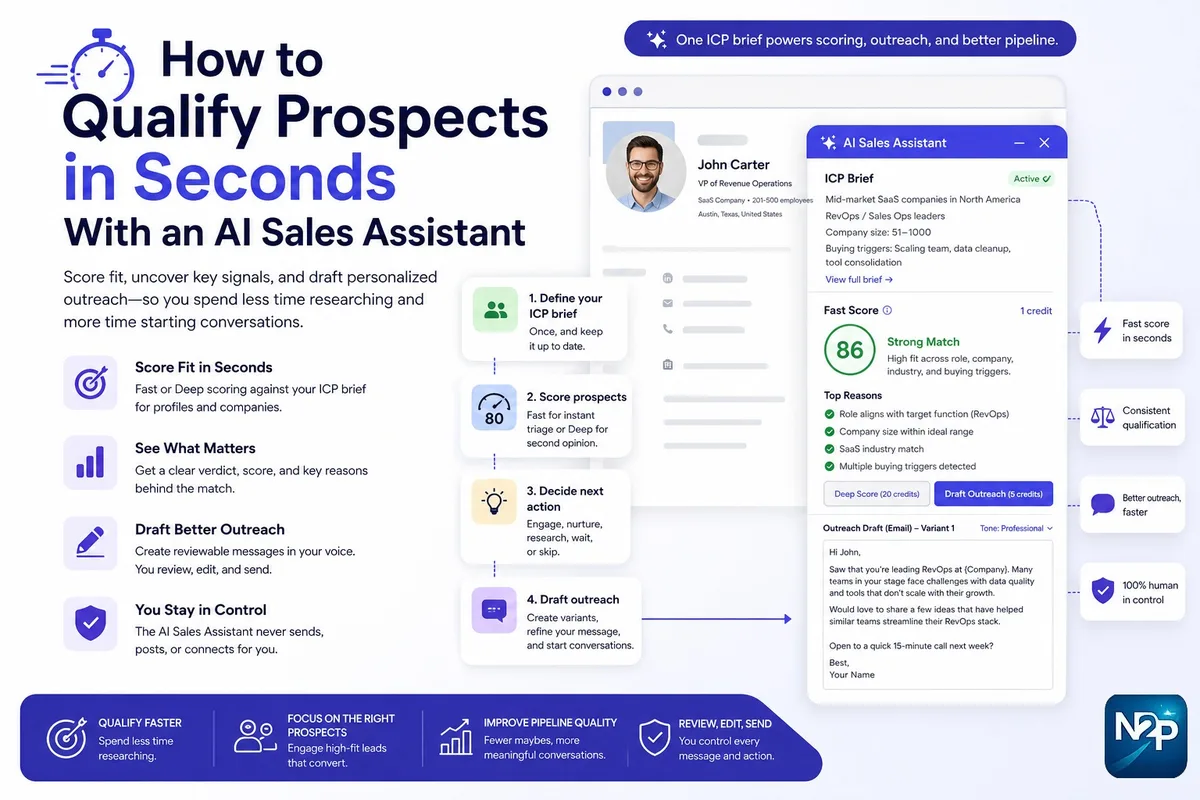
An AI Sales Assistant changes that workflow. Instead of relying on gut feel, it scores the prospect or company against your approved ICP brief, gives a fit verdict, and helps you decide the next best action. When the match is strong, it can also draft outreach in your voice for you to review, edit, and copy.
The goal is not to remove human judgment. The goal is to stop wasting it on obvious bad fits.
What prospect qualification really means
Qualifying a prospect is not just checking whether someone has the right job title.
A good-fit prospect usually matches several conditions at once: the right role, the right level of seniority, the right company type, the right market, and a believable reason to care about what you sell. A poor-fit prospect may look promising on the surface but fail on company size, geography, use case, budget, timing, or another disqualifier.
That is why qualification needs to answer more than “Is this person relevant?” It should answer:
- Fit: Does this person or company match the ICP?
- Priority: Is this a strong match, a maybe, or a skip?
- Reason: What signals support the decision?
- Next action: Should the team engage, nurture, research, wait, or move on?
For example, a VP Sales at a large enterprise may have the right title but sit far outside your target company size. A Head of Growth at a smaller B2B company may have a less obvious title but match your buying trigger, company profile, and use case perfectly.
Manual review often misses that difference. AI-assisted qualification makes it easier to apply the same logic every time.
Why manual qualification breaks down
Manual prospect review works when the list is small and the ICP is simple. It breaks down when the team needs to qualify dozens or hundreds of records across tools like Apollo, ZoomInfo, Clay, Prospeo, CRM exports, CSV files, spreadsheets, and public web sources.
There are four common problems.
Different reps interpret the ICP differently
One SDR may treat a prospect as a strong fit because the title looks right. Another may reject the same prospect because the company is too small. A third may be unsure and add the person to a generic sequence anyway.
That inconsistency creates uneven pipeline quality.
CRM fields rarely tell the full story
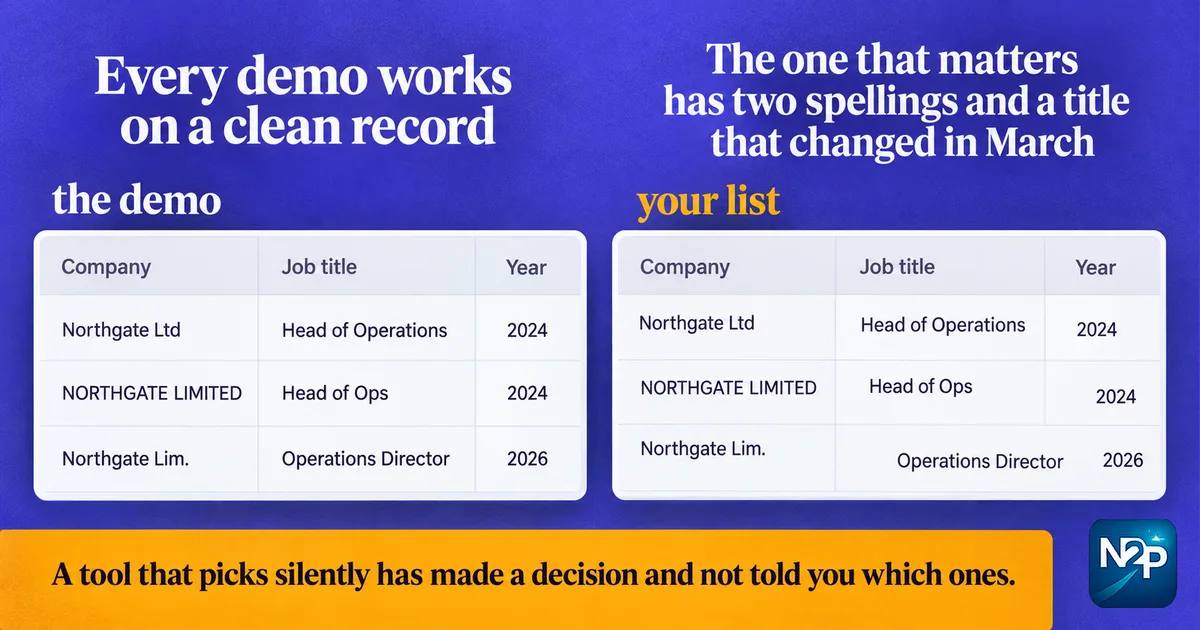
Structured fields are useful, but they do not always capture nuance. A prospect may have a relevant job title but work in the wrong segment. A company may be in the right industry but sell to the wrong audience. A lead source may provide partial data that still needs interpretation.
“Maybe” leads create pipeline noise
When teams are unsure, they often keep the lead. That feels safe in the moment, but it creates downstream waste. Reps spend time writing weak messages, managers review low-fit activity, and CRM becomes cluttered with leads that were never likely to convert.
Qualification slows down outreach
The more time a rep spends deciding whether someone is worth contacting, the less time they spend on high-quality conversations. Speed matters, but speed without consistency creates poor targeting. The best workflow gives both.
Manual qualificationAI-assisted qualificationDepends on individual judgmentUses the same ICP brief each timeSlow for large listsScores fit in secondsHard to explain decisionsShows score, verdict, and rationaleCreates too many “maybe” leadsSeparates strong, maybe, skip, and disqualified recordsOutreach starts from a blank pageDrafts reviewable messages from fit signals
Start with one ICP brief
Fast qualification starts before you open the prospect. It starts with a clear ICP brief.
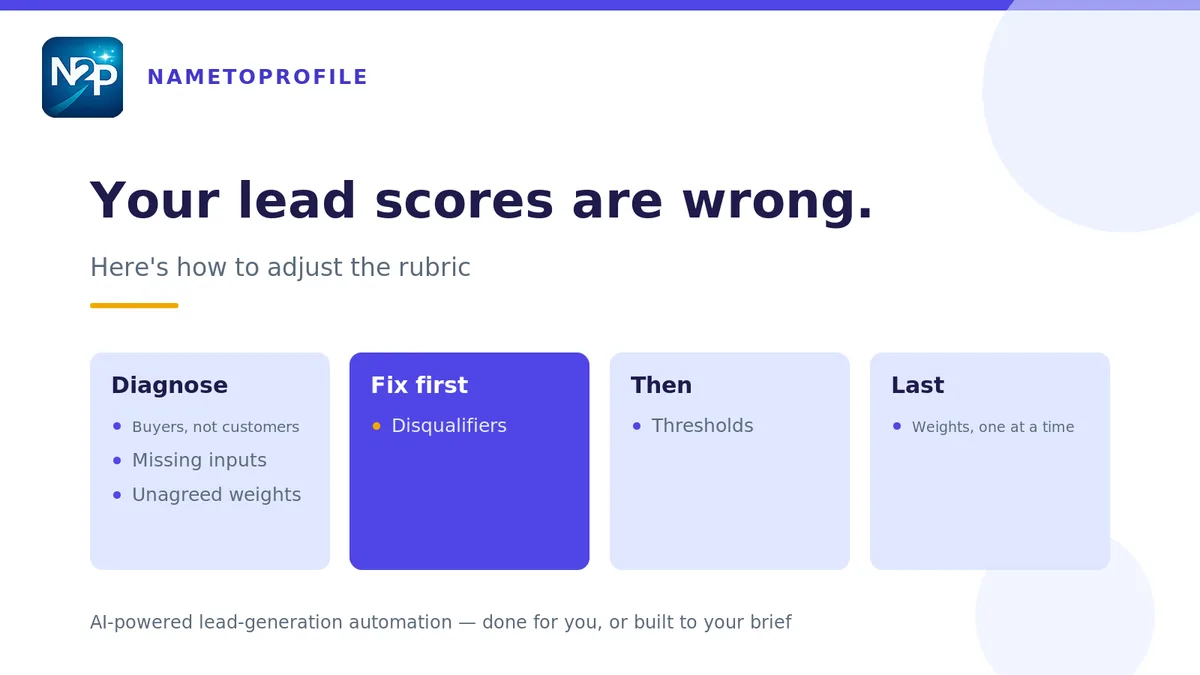
An ICP brief defines who you want to reach, why they are a fit, and who should be excluded. In NameToProfile, the brief can include ICP segments, target titles, seniority, functions, industries, geographies, company size, company type, buying reasons, disqualifiers, buying triggers, tone guidance, and a scoring rubric.
That matters because an AI Sales Assistant is only useful if it is scoring against the right standard. Without a shared ICP brief, the assistant can still summarize or draft, but it cannot consistently answer the most important question: “Is this prospect actually worth our time?”
With a brief in place, the team can use the same qualification logic across prospect scoring, account scoring, outreach drafting, enrichment, and done-for-you lead delivery. One ICP brief powers the workflow instead of forcing every rep or operator to reinterpret the target customer from scratch.
Use Fast scoring for instant triage
Most prospecting decisions do not need a long analysis. They need a fast first pass.
Fast scoring is designed for instant triage. It applies deterministic rules against your ICP brief and returns a score and verdict, such as strong, maybe, skip, or disqualified. It is useful when you are reviewing a lead list, checking a CRM segment, preparing a campaign, or deciding which prospects deserve deeper research.
A simple workflow looks like this:
- Open a prospect or company page from your normal workflow.
- Use the AI Sales Assistant side panel to score the profile or company against your approved ICP brief.
- Keep strong matches for outreach.
- Route maybe-fit prospects for review or deeper scoring.
- Skip disqualified prospects before they consume more time.
This is where teams often save the most time. Instead of reading every detail manually, the rep gets a quick fit signal and can decide what to do next.
Use Deep scoring when the decision needs judgment
Not every prospect is obvious. Some leads sit in the gray area.
A prospect may have the right company but an unusual title. An account may match the target market but show mixed signals. A strategic account may be important enough that the team wants more than a simple score before deciding how to approach it.
That is where Deep scoring helps.
Deep scoring adds an LLM second opinion with a written rationale, confidence, and recommended action. Instead of only saying “maybe,” it can explain why the prospect should be engaged, nurtured, researched further, delayed, or skipped.
Use Deep scoring for:
- Borderline prospects that could go either way
- Strategic accounts where the decision matters more
- High-value leads before personalized outreach
- Prospects with incomplete or conflicting signals
- Internal review when a rep needs to explain why a lead is worth pursuing
In practice, Fast scoring is best for speed. Deep scoring is best for judgment. Together, they help the team qualify quickly without treating every lead the same.
Turn qualification into outreach prep
Qualification is only useful if it changes what the team does next.
When a prospect scores well, the AI Sales Assistant can help draft outreach based on your brief, your tone, and the fit signals found during review. That might include a connection note, direct message, email, or social post draft.
The important part: the assistant does not send, post, connect, or take action on your behalf. It creates text you review, edit, and copy. You stay in control of the final message and the channel where it is used.
This keeps the workflow practical. The rep does not have to start from a blank page, but the human still decides what is accurate, appropriate, and ready to send.
For example, after a strong score, the workflow may look like this:
- Review the score and fit rationale.
- Generate one to three outreach variants.
- Make the message shorter, warmer, more direct, or more specific.
- Edit the final copy for accuracy and context.
- Paste it into the team’s chosen outreach workflow.
This connects qualification to action. The rep is not just deciding who is a fit. They are preparing better outreach for the prospects most likely to matter.
Example: qualify a prospect in under a minute
Here is what a fast AI-assisted workflow can look like for an SDR, founder, agency operator, or RevOps team member.
- Start from your existing source. The prospect may come from Apollo, ZoomInfo, Clay, Prospeo, a CRM record, a CSV or Excel file, a public company page, LinkedIn™, or another source your team already uses.
- Open the prospect or company page. Review the context in your browser without changing your core workflow.
- Run a Fast score. The AI Sales Assistant checks the prospect or company against the approved ICP brief and returns a score and verdict.
- Decide the route. Strong matches move toward outreach. Disqualified leads are skipped. Maybe-fit leads get reviewed or scored more deeply.
- Use Deep scoring when needed. For strategic or unclear prospects, request a written rationale and recommended action.
- Draft outreach for qualified prospects. Generate reviewable message variants based on fit and tone.
- Record the decision. Update your CRM, spreadsheet, or sales workflow with the next step.
The value is not just speed. It is repeatability. Every prospect is checked against the same brief, so the team is less dependent on memory, mood, or individual interpretation.
How RevOps and agencies can standardize qualification
For individual reps, AI-assisted qualification saves time. For RevOps teams and lead-generation agencies, the bigger benefit is standardization.
When multiple people work from the same ICP brief, the team can create a shared definition of fit. That helps with campaign setup, list QA, CRM preparation, outbound prioritization, and client reporting.
Instead of saying, “This lead looked good,” an operator can explain:
- Which ICP segment the prospect matched
- Which signals supported the score
- Which disqualifiers were checked
- Why the recommended action was engage, nurture, research, wait, or skip
That is especially useful for agencies managing different client briefs. One campaign may prioritize founder-led SaaS companies. Another may target RevOps leaders in mid-market B2B. Another may focus on recruiting or talent sourcing. The workflow can stay consistent while the ICP brief changes by client or campaign.
RevOps teams can also use the same logic to reduce CRM noise. Instead of letting every imported record become a sales task, teams can score and segment records before they reach reps.
When to use self-serve vs. done-for-you
Some teams want to run qualification themselves. Others want finished lead lists delivered.
NameToProfile supports both approaches.
With self-serve, your team uses tools like the AI Sales Assistant to score prospects, review companies, draft outreach, and control the workflow directly. This is useful when your team wants hands-on control, fast iteration, and direct visibility into qualification decisions.
With done-for-you lead generation, you hand over the ICP and the delivery team builds scored, enriched, ready-to-contact lists for you. This is useful when you want the output without managing every step internally.
The important connection is the ICP brief. Whether you run the workflow yourself or use a managed service, the same qualification logic can guide who gets scored, enriched, prioritized, and delivered.
Best practices for AI-assisted prospect qualification
To get the most value from an AI Sales Assistant, keep the workflow simple and reviewable.
Keep your ICP brief specific
A vague ICP creates vague scoring. Be clear about target segments, company types, buying triggers, and disqualifiers. The sharper the brief, the faster the qualification decision.
Use Fast first, Deep selectively
Do not over-analyze every prospect. Use Fast scoring to separate obvious strong fits from obvious skips. Save Deep scoring for important or unclear cases.
Review the rationale, not just the score
A score is useful, but the reasoning matters. The rationale helps reps understand why a prospect fits and gives them better context for outreach.
Do not automate away control
AI should help your team decide and draft faster. It should not silently send messages, connect accounts, or make irreversible changes. Keep humans in control of final actions.
Close the loop with outcomes
Review which scored prospects convert, reply, book meetings, or disqualify later. Use those learnings to improve your ICP brief and scoring rules over time.
Qualification should be fast, consistent, and reviewable
Prospect qualification does not need to be slow to be thoughtful.
With the right workflow, your team can define the ICP once, score prospects in seconds, reserve deeper judgment for the leads that need it, and draft better outreach only for the people and companies worth pursuing.
That is the real advantage of an AI Sales Assistant. It gives reps a faster way to answer the question that matters most before outreach begins: “Is this prospect worth our time, and what should we do next?”
Start free and qualify your next prospects with the AI Sales Assistant.